

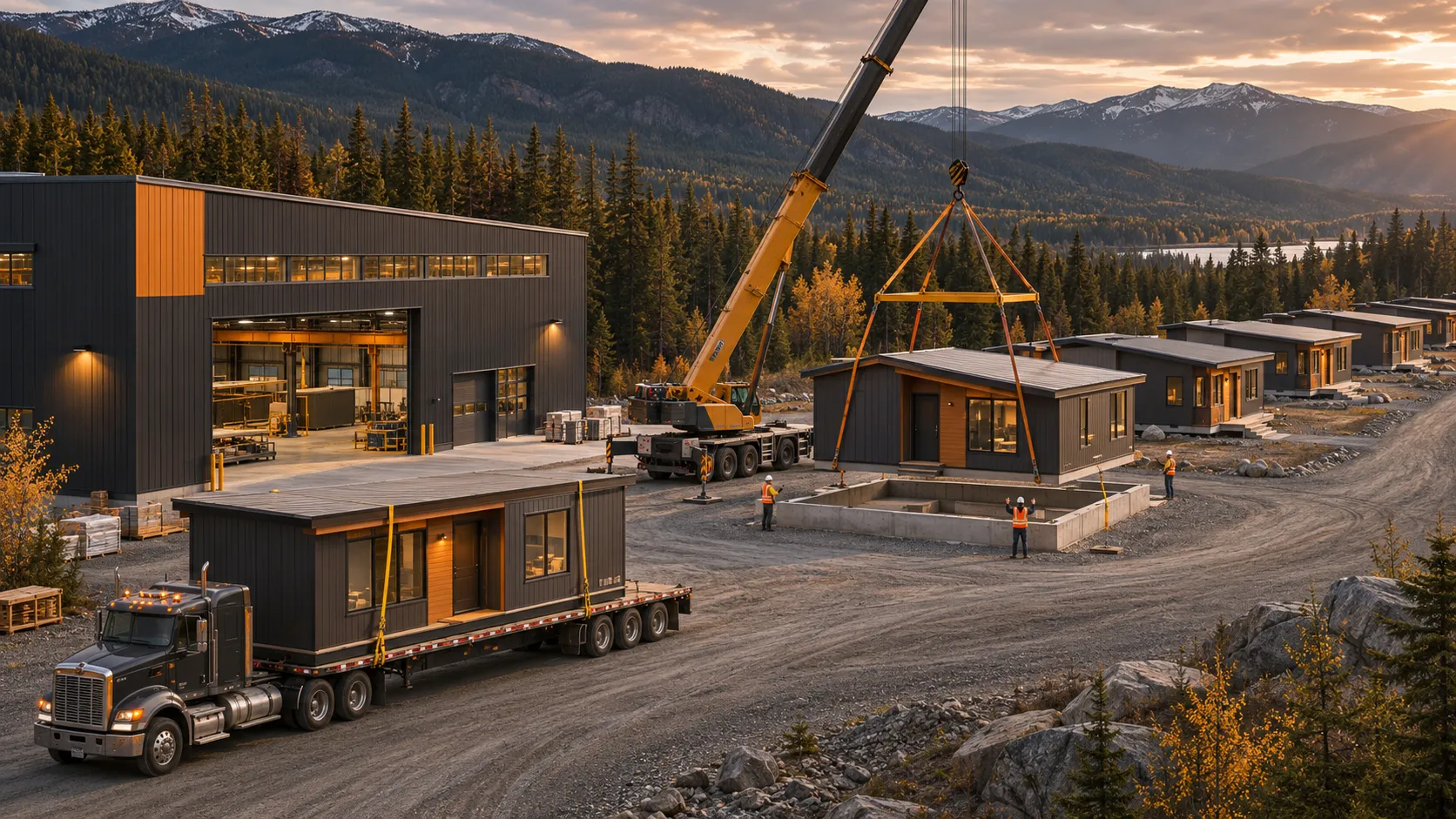
Kelowna LGS Ltd. · Kelowna and Vancouver, British Columbia
Automated steel. Faster homes.
We're building an AI automation layer and robotic systems that carry design data from the roll former to the finished wall, so light gauge steel homes can be built faster, more precisely and at scale.
The opportunity
Canada needs homes faster than it can frame them
Governments are prioritizing factory-built housing, but most wall panels are still assembled by hand. Light gauge steel and automation can change that.
More homes, sooner
Federal and provincial housing programs are backing factory-built methods to speed up supply, from cities to remote and resort communities.
Fewer framers
Skilled framing crews are scarce. Automation lets a small team produce consistent panels every shift, year-round, indoors.
Steel made to the model
Roll-formed steel is cut, punched and labelled exactly to the design. It is straight, consistent and non-combustible, and it won't rot or warp.
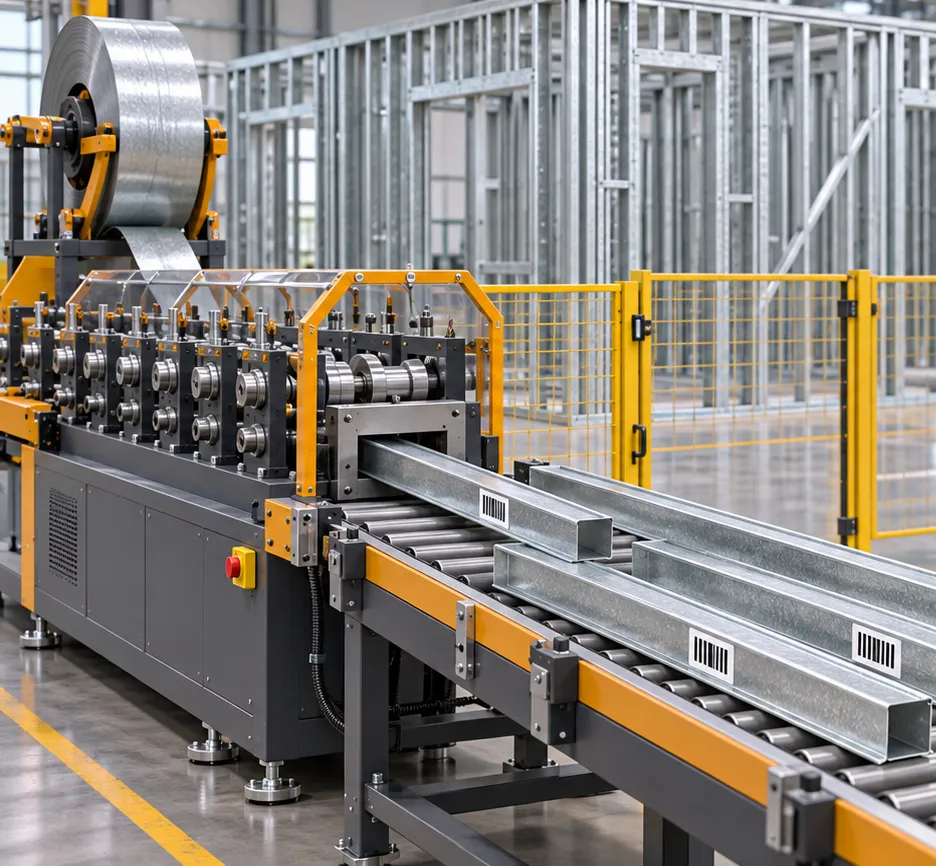 Illustrative
The gap
Automation stops at the roll former
Modern roll-forming lines already automate everything from the building model to the cut steel member. After that, people identify, place and fasten each piece by hand, and the design data stops carrying forward.
That hand-off is where Kelowna LGS works: connecting the same data that drives the roll former to robots, quality checks and the finished wall.
Our AI automation layer
The AI that ties the whole factory together
Kelowna LGS's proprietary AI is the layer that integrates everything: design, detailing, roll forming, robots, assembly handling and quality checks all run from one assembly model. It's our IP, built in partnership with SPARC.
One assembly model
Building models, detailing exports and machine data are checked and merged. Bad inputs are rejected, never waved through.
Robots that know each part
Vision identifies every member as it arrives, and the system plans the assembly order, tested in simulation first.
Every wall verified
A 3D scan checks the finished wall against the model and writes an as-built record back to the design.
Operators stay in charge
Anything the AI is unsure about goes to a person. The system never overrides the operator.
Machine- and software-agnostic. We start with Scottsdale roll-forming lines and ABB robots, and design the data model to connect to other equipment and design software.
Next-generation assembly handling. Alongside the AI layer, we're developing proprietary robotic handling technology designed to hold, position and complete steel wall, floor and truss assemblies with less fixturing, fewer manual steps and faster changeover between assembly types. Details are available to partners and investors under NDA.
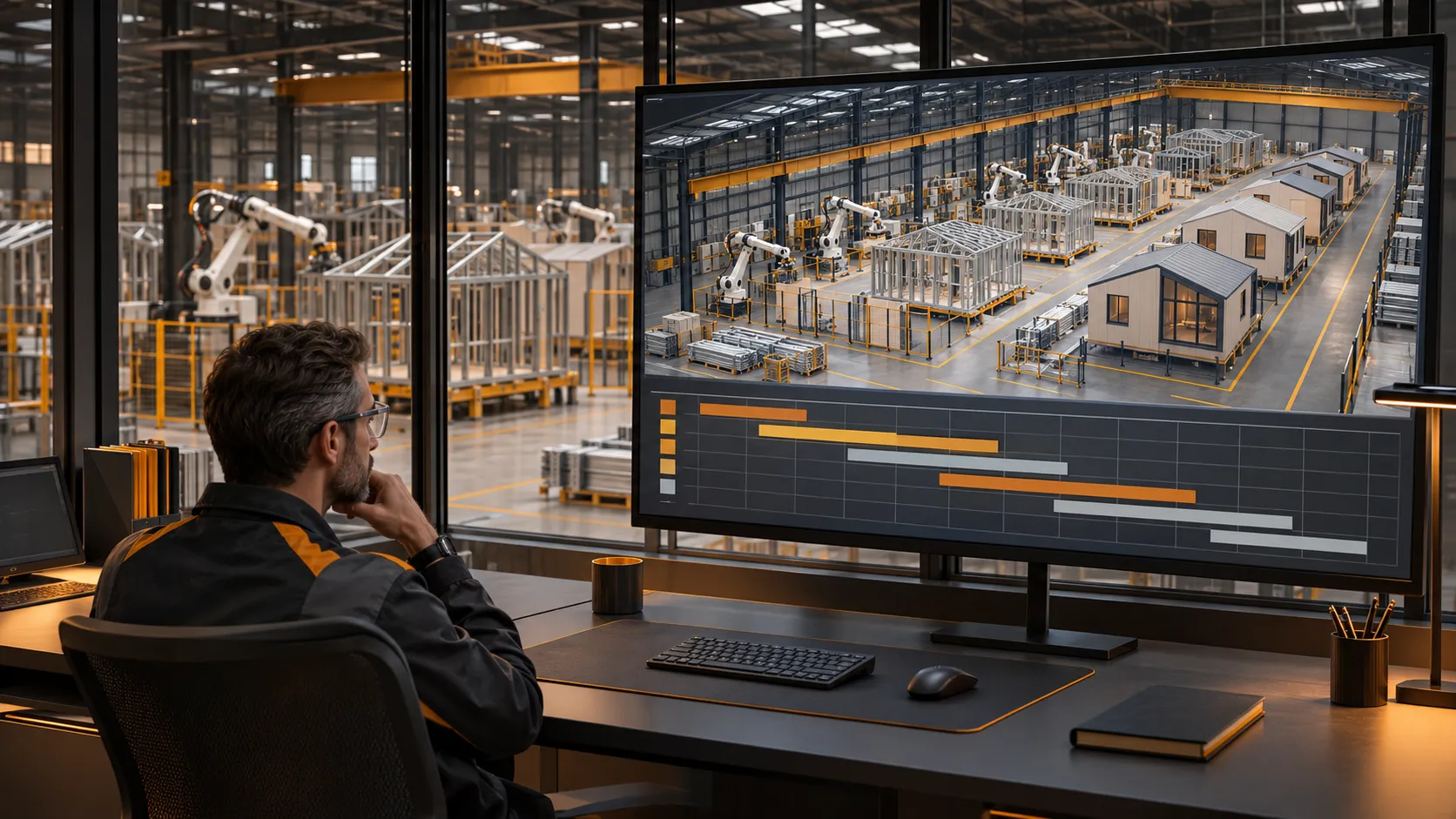 Illustrative
Research and partners
Engaged with UBC Okanagan on robotic prefabrication
Kelowna LGS is engaged with researchers at UBC Okanagan's School of Engineering on robotic prefabrication of light gauge steel buildings. The work focuses on turning roll-former data into robot tasks, adaptive robotic assembly and closed-loop quality checks, using the university's new robotics lab, opening in early 2027.
Planned next: joint work on new connection systems for steel wall assemblies, designed to be faster for robots to make and stronger and easier to join on site.
Research runs alongside our commercial build, so proven results move straight from the lab into a working factory.
Construction automation research, robotics lab and highly qualified students.
Builds Kelowna LGS's AI layer with us: data intake, vision, sequencing and the human review queue.
Proven light gauge steel roll-forming lines and design software, our first equipment platform.
BC builders and community projects ready to take the first production walls.
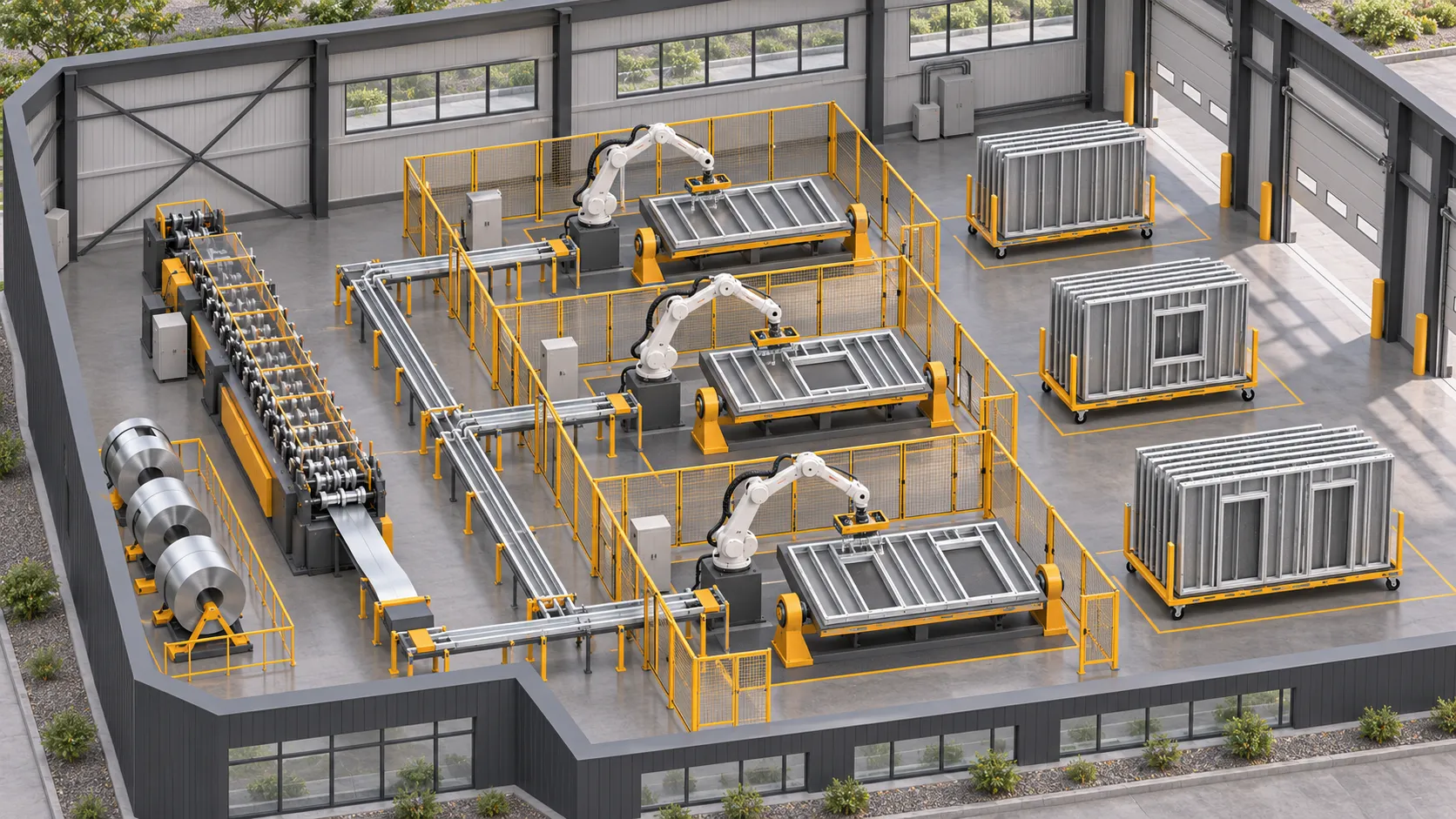 Illustrative
The Kelowna plant
Coil in, walls out
Phase 1 is a 20,000–25,000 sq ft plant in the Okanagan: one roll-forming line feeding robotic assembly cells, with panels sized to ship on standard trucks across BC.
- Roll-forming lines
- 1
- Robotic assembly cells
- 2, room for a 3rd
- Capacity, two shifts
- 370–410 homes / yr
- Products
- Walls, then trusses and floors
Planning estimates, to be confirmed in simulation and vendor quotes.
Roadmap
From a working cell to whole-home automation
Three years from agreements signed, with research and commercial work moving together.
First robotic cell
- Assembly data model and robot simulation
- First cell built with ABB and an integrator
- First production walls around month 12
Production and pilots
- Two cells in production
- Vision, adaptive robot paths and 3D-scan QA
- Pilot homes delivered in BC
The rest of the home
- Trusses, floor cassettes and closed panels
- Cells offered to other roll-former owners
- Partner plants across Canada
Why it matters
Homes for communities that need them now
Precise steel panels, made indoors in any season, arrive ready to stand. That means faster builds for growing towns, resort and workforce housing, and remote communities where crews and building seasons are short.
- Built indoors, year-round
- Every wall checked against the model
- Non-combustible, rot-proof steel framing
Team
Founders
Tom Rus
Authorized Scottsdale Steel Frames distributor. Brings deep light gauge steel roll-forming and building-system experience.
Shawn Babcock
Founder of AI Game Changers. Brings together the research, AI and funding partners behind Kelowna LGS.
Investors and collaborators
Help build Canada's steel housing factory
We're working with research, government and industry partners to fund and build the first plant. If you invest, fund innovation or build homes, we'd like to talk.
Contact Shawn Babcock at shawn@kelownalgs.com or Tom Rus at tom@kelownalgs.com.
- 01InvestorsPhase 1 plant and robotic cells
- 02Research and government partnersDemonstration lines, research programs and innovation funding
- 03Builders and communitiesPilot projects and offtake